ASP.NET API • 2 Min Read
NZ Walks API
Sumit Kumar
December 27, 2025
Technology Stack Used
- ASP.NET Core Web API
- Entity Framework Core
- SQL Server
- Repository Pattern
- DTO (Data Transfer Object) Pattern
- Dependency Injection
This stack ensures separation of concerns, maintainability, and high performance.
API Design & Architecture
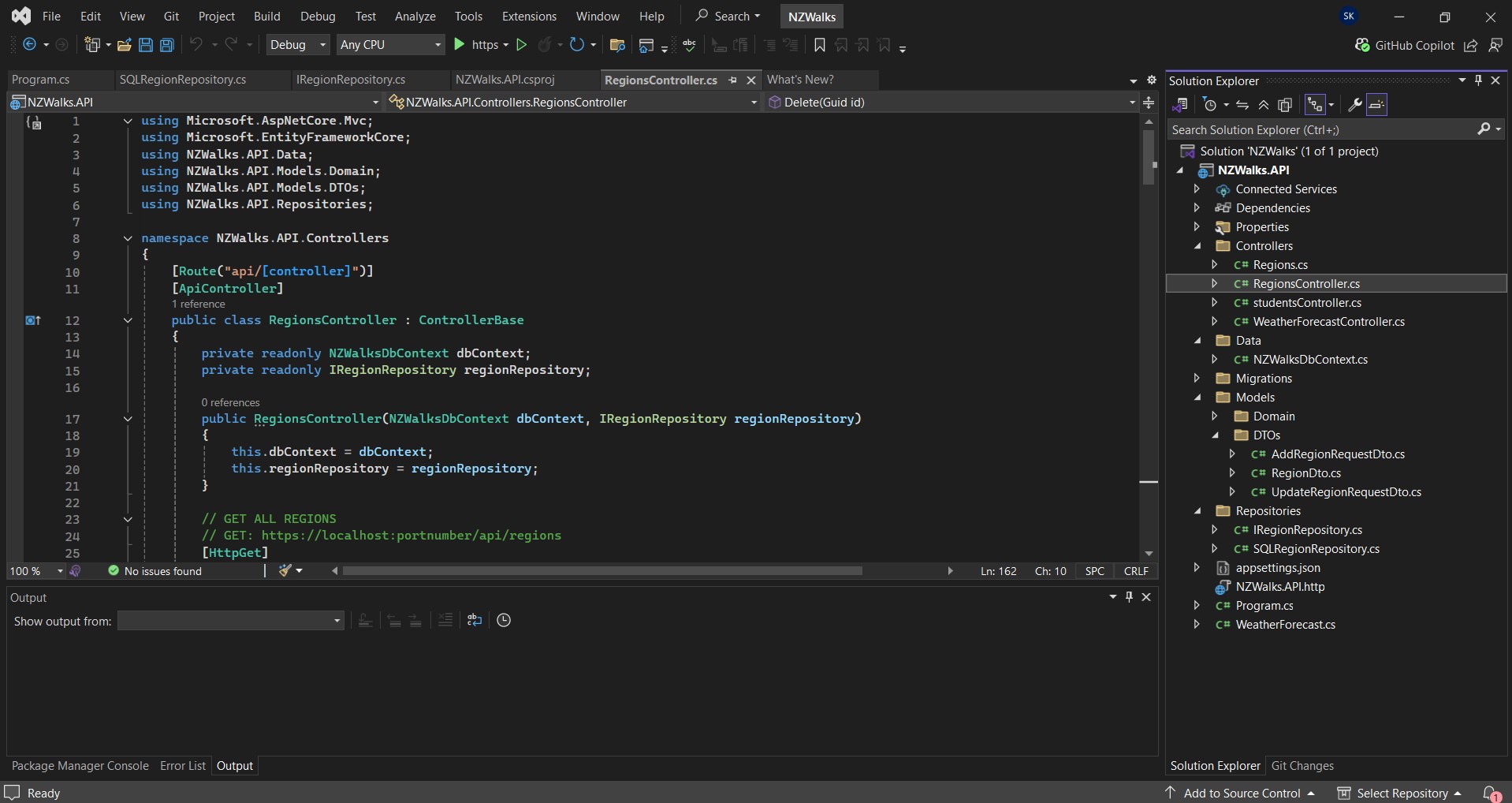
Controller-Based API Structure
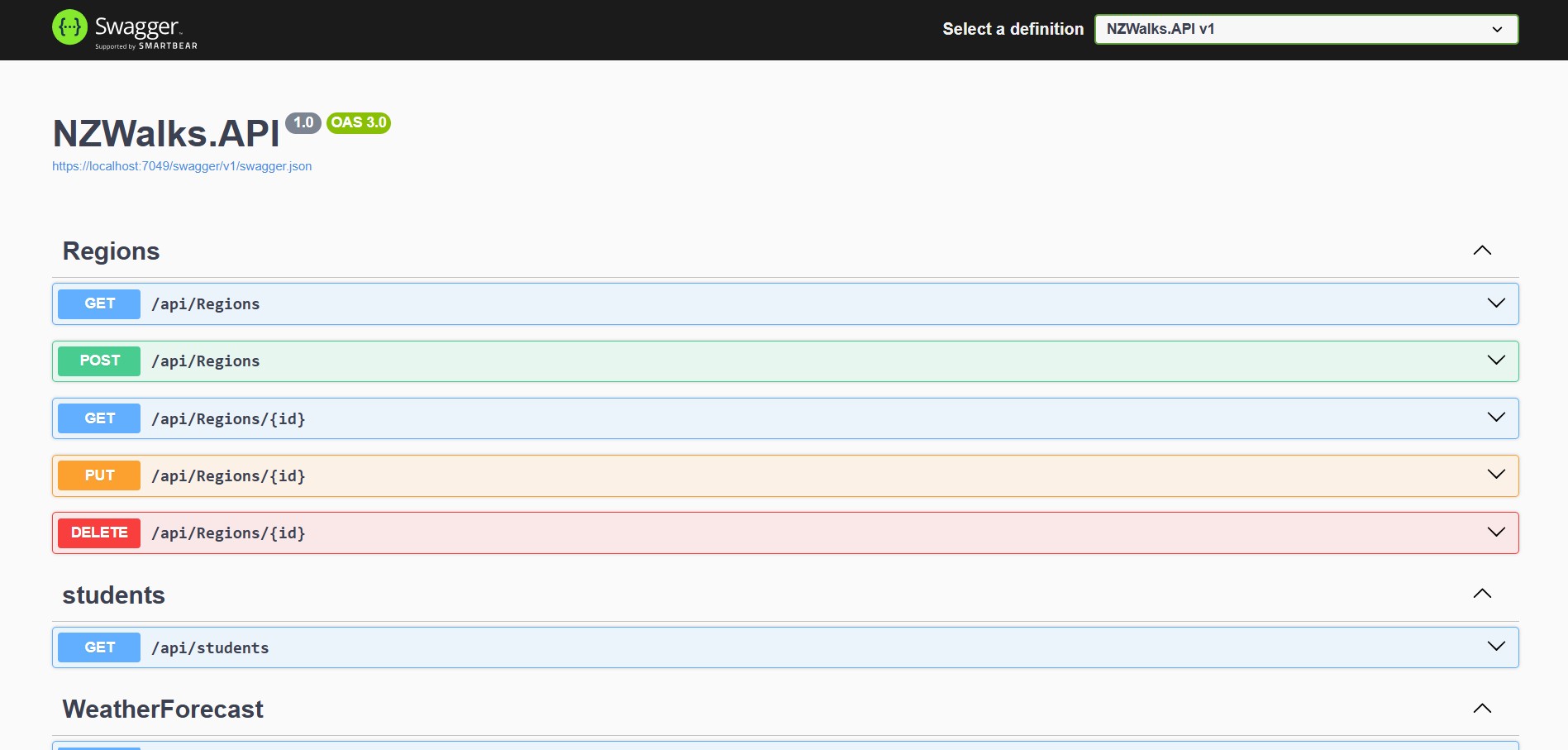
The API is structured using controller-based routing, following REST conventions.
Each endpoint is version-independent and easy to extend in the future.
Repository Pattern Implementation
- Business logic is abstracted using an IRegionRepository
- Controllers do not directly depend on the database
- Improves testability and code readability
DTO Usage
- Domain models are never exposed directly
- DTOs ensure secure and controlled data transfer
- Prevents over-posting and under-posting issues
API Endpoints Overview
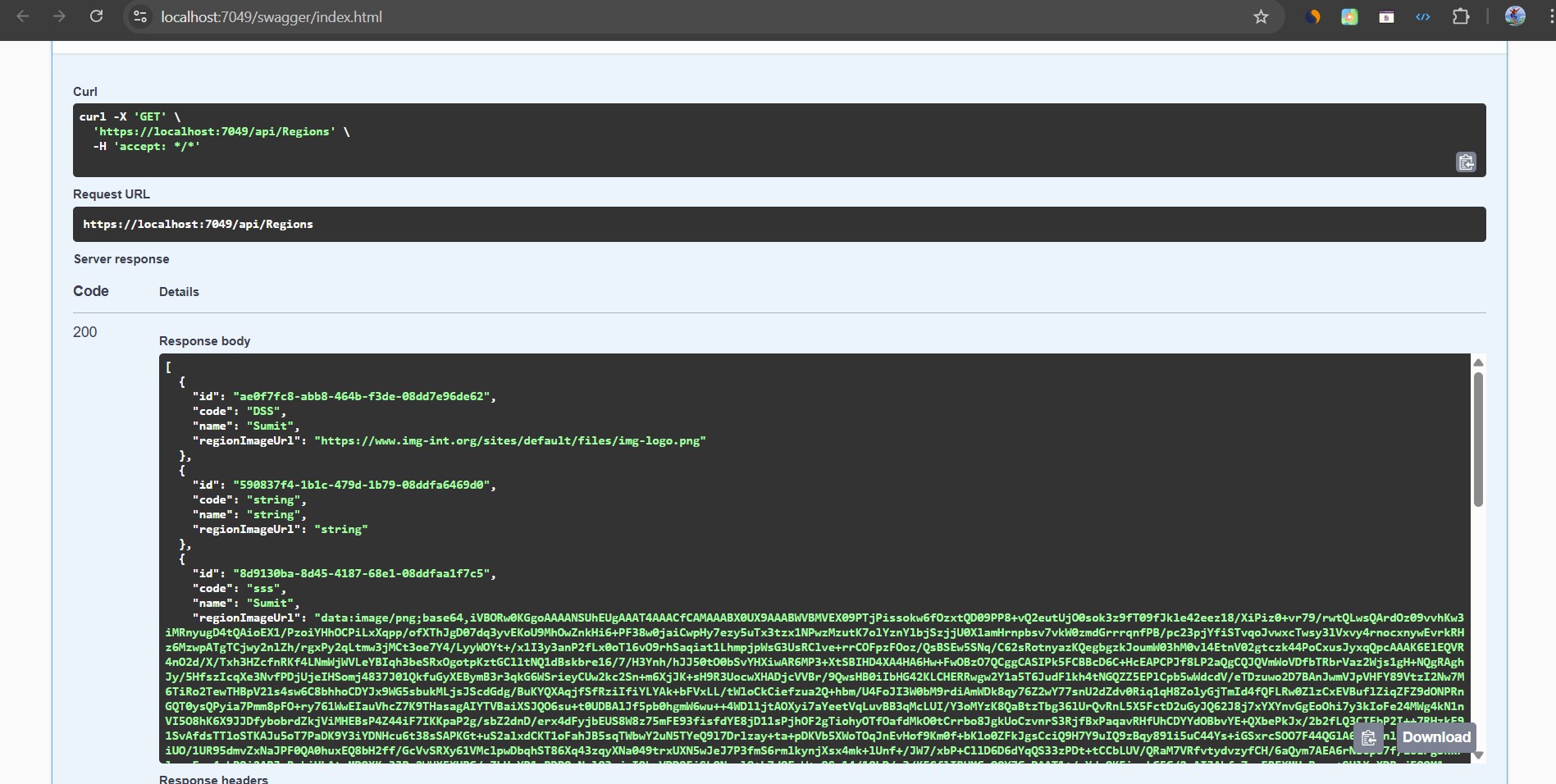
1. Get All Regions
- Retrieves a list of all regions
- Returns data in a structured DTO format
- Ideal for listing regions on UI or dashboards
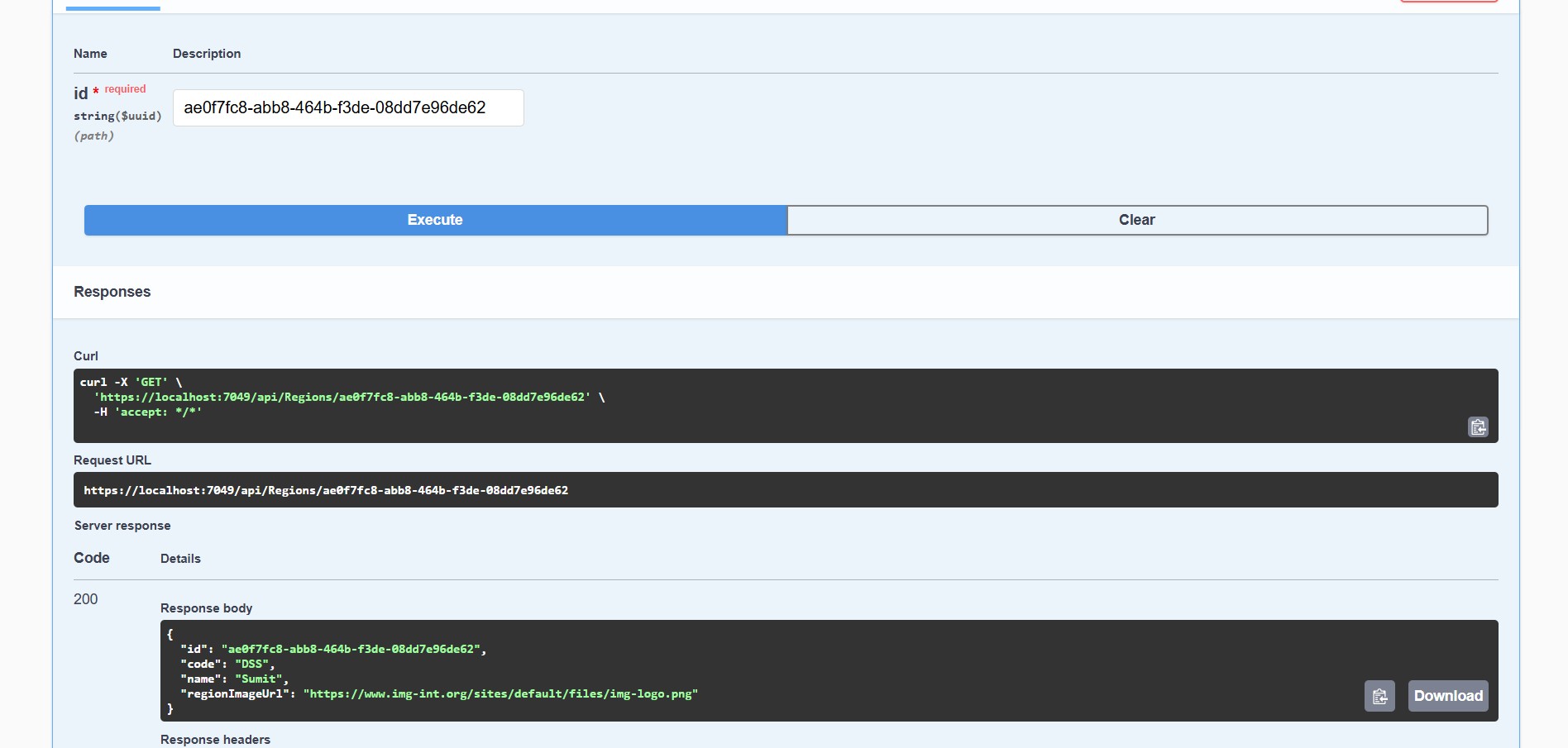
2. Get Region by ID
- Fetches a single region using a unique identifier
- Returns proper HTTP status codes
- Handles invalid or non-existing IDs gracefully
3. Create New Region
- Allows adding a new region
- Accepts request data through a DTO
- Automatically generates and returns the resource location
- Follows REST best practices
4. Update Existing Region
- Updates region details using its unique ID
- Ensures data consistency
- Returns updated data after successful modification
5. Delete Region
- Deletes a region using its ID
- Returns deleted record details
- Prevents deletion of non-existing resources
Database Interaction
- Database access is handled using Entity Framework Core
- All operations are asynchronous to improve performance
- Changes are tracked and saved efficiently
- Ensures scalability for large datasets
Key Features & Highlights
- Fully REST-compliant API design
- Clean separation of Controller, Repository, and Data layers
- Secure data handling using DTOs
- Asynchronous database operations
- Proper HTTP status code usage
- Scalable and production-ready structure
Real-World Use Cases
This API can be used in:
- Tourism and travel applications
- Location-based services
- Admin dashboards for region management
- Mobile apps requiring region data
- Microservices-based architectures
Learning Outcomes
Through this project, I strengthened my skills in:
- ASP.NET Core Web API development
- RESTful API design principles
- Entity Framework Core integration
- Repository & DTO patterns
- Clean and maintainable backend architecture
Conclusion
The NZ Walks Regions API is a well-structured, scalable, and secure backend service built using modern .NET practices.
It demonstrates my ability to design real-world APIs that follow industry standards and are ready for integration with frontend applications.
This project reflects strong backend fundamentals and is suitable for enterprise-level applications.